Ajar Artificial Intelligence Logo

Building AI-Powered Knowledge Assistants

A Framework for Organisational Intelligence

📄 Get the Complete AI Implementation Guide

The full PDF guide with detailed walkthroughs, code examples, templates, and implementation checklists.

€19.99

One-time purchase • Instant PDF download

Part I: The Conceptual Foundation

"The goal is not to replace human intelligence, but to augment it—to create systems that allow professionals to access the full depth of their organisation's knowledge instantly and accurately."

The Modern Librarian

Think of an AI assistant not as a decision-maker, but as an incredibly knowledgeable librarian. It knows where everything is, can retrieve it instantly, and can explain context—but the professional remains the expert who interprets and acts on that information.
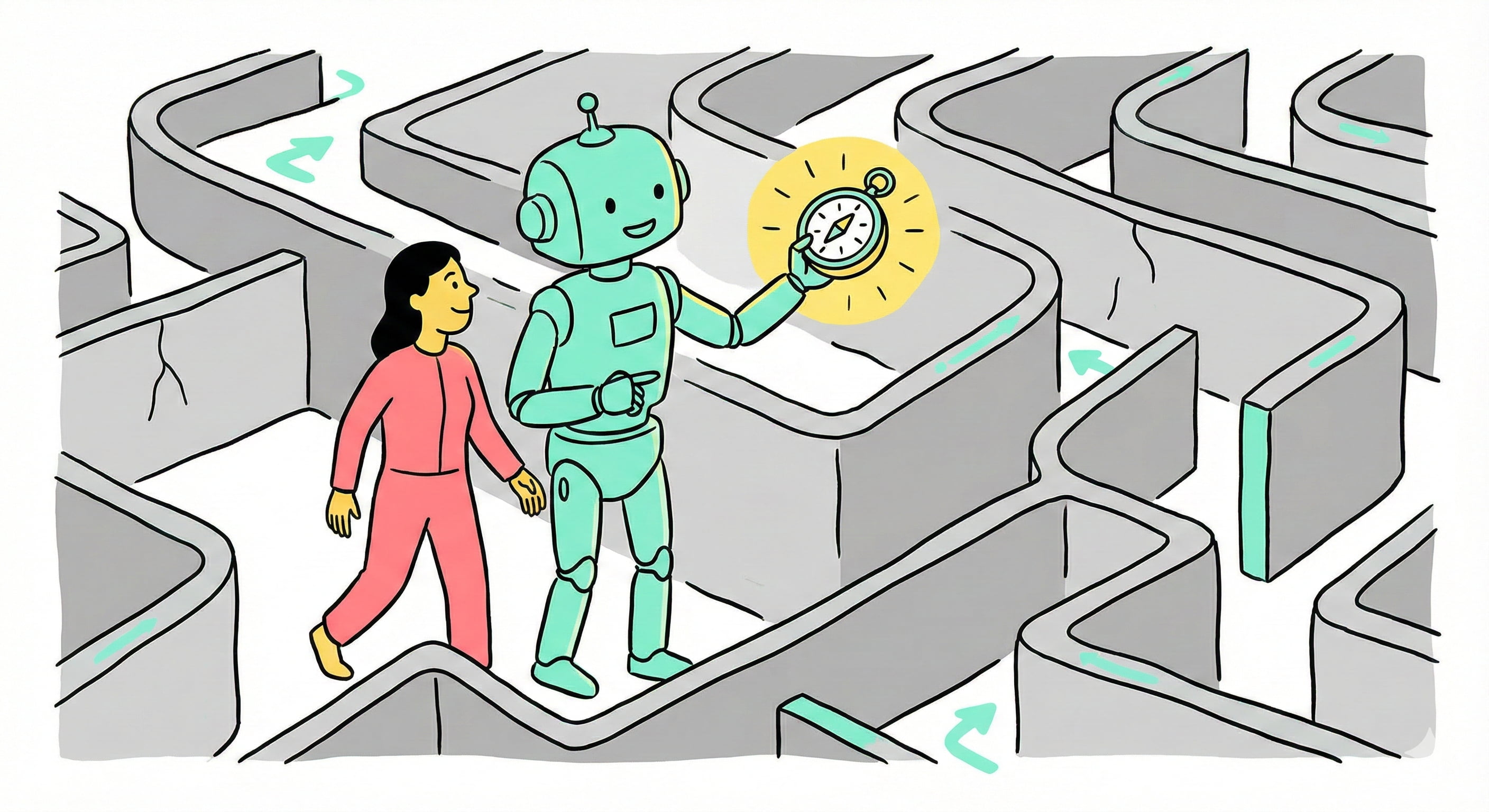

AI as Navigator / Librarian

The Three Pillars of Organisational Knowledge

1. Operational Assets

The artifacts that define how work gets done. Policies, contracts, templates, and mandates. These are the living documents that govern daily operations.

Operational Assets

2. Structural Schemas

The definitions of entities. Database structures, property registries, risk exposure tables. These provide the framework that organises your information.

Structural Schemas

3. Reference Documentation

The accumulated wisdom. Manuals, guides, institutional memory that explains the "why." This is where tacit knowledge becomes explicit.

Reference Documentation

Part II: The Technical Framework

MCP is an open standard that enables AI models to invoke external "tools" via a structured interface.

The Information Flow

  1. User Question: Natural language query.
  2. Tool Analysis: AI determines which tools are needed.
  3. Invocation: AI calls the tool (e.g., search_policy).
  4. Execution: MCP Server queries the database/files.
  5. Synthesis: AI combines the results into an answer.
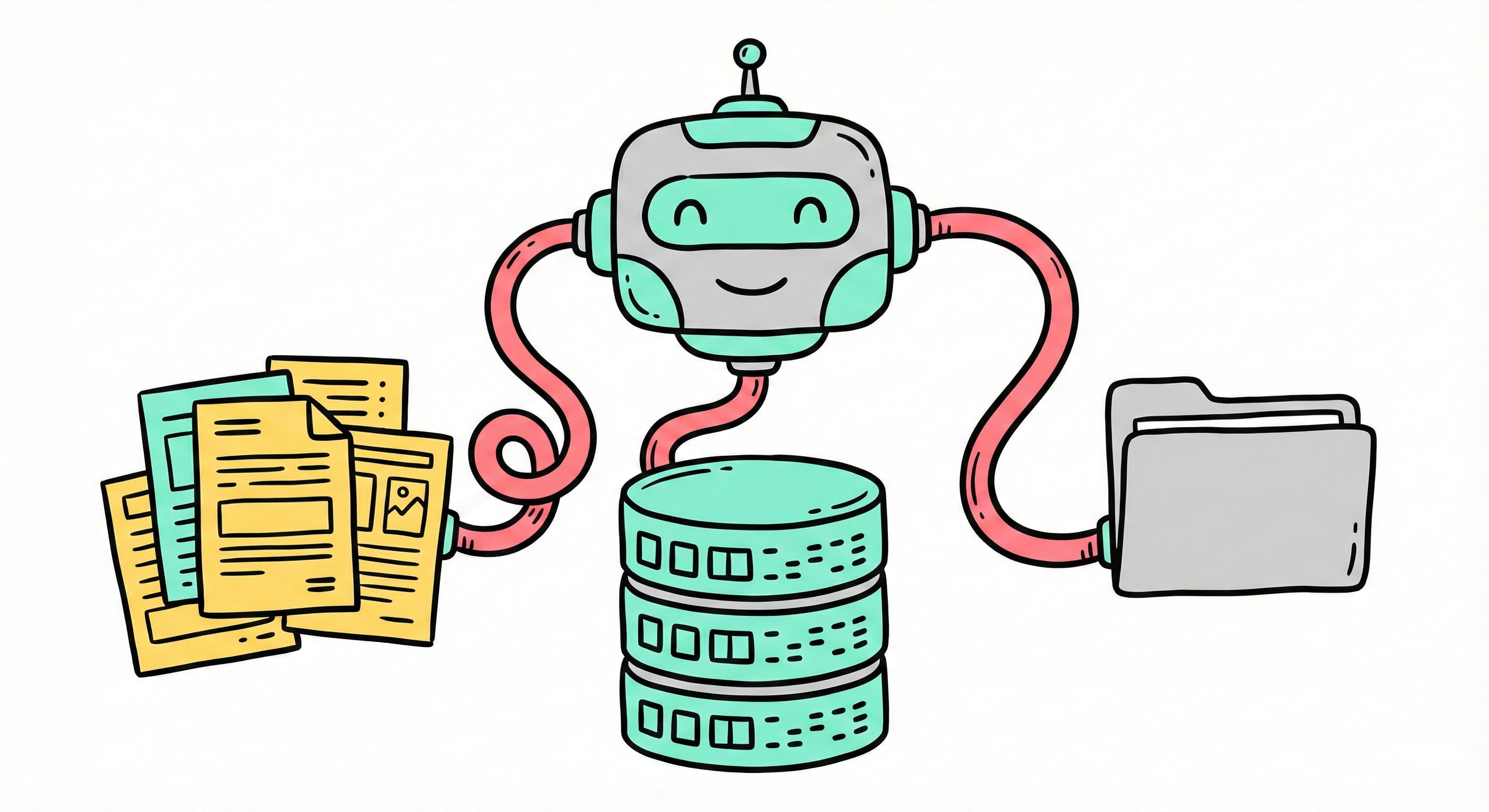
Robot connecting to Data Silos

The Universal Tool Taxonomy

PillarTool CategoryPurpose
Operational AssetsAsset Search & RetrievalFind and read policies, procedures, templates, contracts
Structural SchemasSchema ExplorationUnderstand data structures, fields, relationships
Reference DocumentationDocumentation NavigationSearch guides, manuals, and institutional knowledge

Why Keyword Search?

While Vector Search (RAG) is popular, professional contexts often require Keyword Search.

Why? Precision. A municipal officer needs "Bylaw 2024-037", not something "semantically similar." Keyword search is deterministic, transparent, and incredibly fast.

Laser Precision

Part III: Data Privacy & Compliance (EU)

For organisations in the EU, navigating GDPR, the AI Act, and NIS2 is mandatory. The MCP architecture supports this by design.

Data Minimisation

The AI retrieves only the specific record needed for the query, not the entire database. This aligns perfectly with GDPR Article 5(1)(c).

Controlled Access

Personal data can be explicitly excluded from tools. A "Public Assistant" toolset can differ from a "Staff Assistant" toolset.

Audit Trails

Every tool call is logged. You know exactly what data the AI accessed, when, and why. This provides the transparency required by the EU AI Act.

Part IV: Practical Applications

This framework is sector-agnostic. Here is how it applies across three very different domains.

1. Municipal Government

The Challenge: Navigating thousands of bylaws, zoning codes, and permit forms.

The Interaction: A citizen asks, "Can I build a garden shed?" The AI uses search_policies to find zoning rules, get_zone_requirements for setbacks, and get_fee_schedule for costs.

Result: An instant, accurate answer citing specific bylaws.

City Hall

2. Financial Services

The Challenge: Complex quantitative models, MiFID II/Basel III regulations, and audit trails.

The Interaction: An analyst asks about VaR model stress testing. The AI uses search_models to find the model specs and search_regulations to check Basel III compliance.

Result: A compliant, sourced explanation of risk exposure.

Financial Charts

3. Event Promotion

The Challenge: Ticket sales velocity, artist contracts, and venue logistics.

The Interaction: A promoter asks, "What budget do I need for a 1,500-cap techno warehouse party?" The AI queries search_historical_events for comparable data and get_budget_framework for cost structures.

Result: A data-driven budget based on actual historical performance.

Concert Crowd

Part V: Implementation Roadmap

Conclusion: The Universal Pattern

Whether you are managing a city, a bank portfolio, or a music festival, the underlying pattern is identical. Professionals need intelligent access to Assets, Schemas, and Documentation.

The MCP-based approach provides this access in a way that is controlled, auditable, and privacy-compliant. It turns your organisation's specific knowledge into an active intelligence.

"Intelligence that is powerful and grounded, general and specific, immediate and accountable."

📄 Get the Complete AI Implementation Guide

The full PDF guide with detailed walkthroughs, code examples, templates, and implementation checklists.

€19.99

One-time purchase • Instant PDF download

Explore further: The Big Implication explains when to automate and when to explore. Somatic Hub offers training for the domains machines cannot touch.